Light Roast vs. Dark Roast: What’s the Difference?
Roast level is one of the biggest factors influencing the flavor, aroma, and body of your coffee. Whether you’re a fan of bold, smoky cups or bright, fruity notes, understanding the difference between light roast and dark roast can help you find the perfect brew for your taste.
In this guide, you’ll learn how roast levels affect the coffee bean, how to recognize the differences in flavor and appearance, and how to choose the right one based on your preferences and brewing method.
What Is Coffee Roasting?
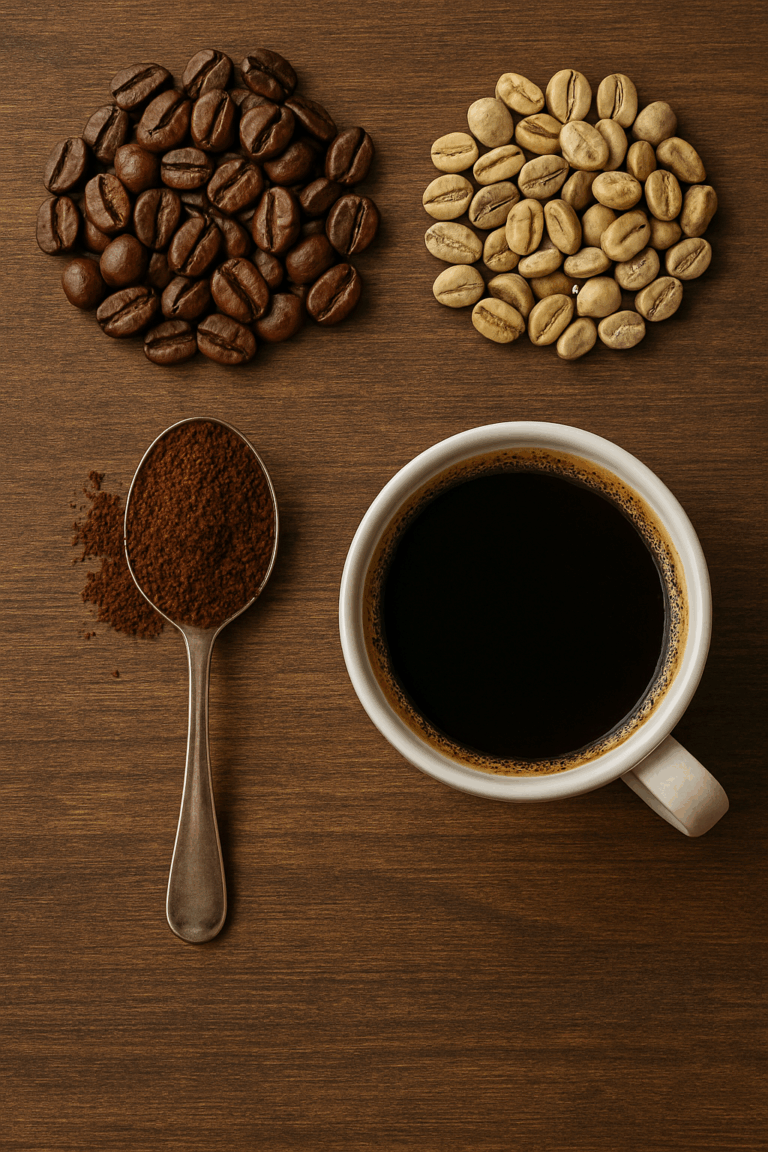
Roasting is the process of heating green coffee beans to transform them into the brown beans we brew. As beans are roasted, chemical reactions occur that bring out aromas, caramelize sugars, and develop flavors.
There are three broad roast levels:
- Light roast: Shortest roast time, light brown color
- Medium roast: Balanced flavor, medium brown
- Dark roast: Long roast time, shiny dark color, intense flavor
For this article, we’ll focus on the key differences between light and dark roasts.
Light Roast Coffee
Appearance:
- Light brown color
- Dry surface (no visible oils)
- Smaller size (less expansion during roasting)
Flavor Profile:
- Bright acidity
- Fruity, floral, citrus, or tea-like notes
- Retains origin characteristics (terroir)
Body:
- Lighter body and mouthfeel
- Crisp finish
Caffeine Content:
Contrary to myth, light roasts often have slightly more caffeine by volume, because they are denser. If you measure by weight (grams), the difference is minimal.
Best Brewing Methods:
- Pour-over (Hario V60, Chemex)
- Aeropress
- Cold brew (for a brighter, refreshing taste)
- Manual drip
Ideal For:
- People who love complex flavors
- Those exploring single-origin coffees
- Fans of tea-like or acidic profiles
Dark Roast Coffee
Appearance:
- Deep brown to almost black
- Shiny surface due to oils released during roasting
- Larger bean size due to expanded structure
Flavor Profile:
- Bitter, smoky, chocolatey, nutty
- Less acidity
- Roast flavor dominates origin notes
Body:
- Full-bodied, heavy mouthfeel
- Thicker texture
Caffeine Content:
Dark roasts are slightly less dense, meaning less caffeine by volume. But again, if you weigh your coffee, the caffeine difference is minimal.
Best Brewing Methods:
- French press
- Espresso machine
- Moka pot
- Drip coffee maker (for those who enjoy bold flavors)
Ideal For:
- Drinkers who prefer bold, rich, and strong coffee
- Milk-based drinks like lattes and cappuccinos
- People who dislike acidity in coffee
Flavor Comparison
Light Roast
- Tastes more like the bean’s origin
- Flavors can include berries, jasmine, lemon, honey, or apple
- Often described as “bright,” “clean,” or “juicy”
Dark Roast
- Tastes more like the roast process
- Flavors often described as “roasty,” “smoky,” “chocolaty,” or “caramel”
- Less flavor variation between origins
Common Myths Debunked
Myth: Dark roast has more caffeine.
False. Light roasts usually have slightly more caffeine by volume because they are denser. The difference is negligible when measuring by weight.
Myth: Light roast is weaker.
False. Light roast may have a delicate taste, but it’s actually stronger in origin flavor and sometimes in caffeine.
Myth: Dark roast is better for espresso.
Not always. Many specialty cafés now use medium or even light roasts for espresso to highlight sweetness and complexity.
How to Choose the Right Roast
Choose light roast if:
- You like fruity, floral, or bright flavors
- You’re tasting single-origin coffee and want to appreciate its unique profile
- You use manual brewing methods and control extraction
Choose dark roast if:
- You prefer bold, chocolatey, or smoky flavors
- You mix coffee with milk or sweeteners
- You want a lower-acid option that’s gentler on your stomach
Can You Blend Them?
Yes! Some roasters create blends using light and dark roasted beans to balance flavor, body, and complexity. This can be great for espresso or drip coffee, offering a mix of origin notes and depth.
Final Thoughts
Roast level dramatically shapes how your coffee tastes. Light roasts celebrate the unique character of the bean and its origin, while dark roasts offer bold, consistent comfort. Neither is better—it all comes down to personal taste.
Experiment with both to discover what you enjoy. Try the same coffee in light and dark roasts to compare how roast changes its profile. Over time, you’ll develop a clearer sense of your ideal cup.