The Impact of Storage Atmospheres: Nitrogen, Vacuum, and the Preservation of Coffee Freshness
Freshness is a critical factor in the quality of coffee, and preserving that freshness from the moment of roasting until brewing is one of the greatest challenges for producers, roasters, and consumers alike. While many people focus on roasting and brewing methods, few realize how much storage atmosphere influences the flavor, aroma, and overall experience of a coffee. In this article, we’ll explore how technologies like nitrogen flushing and vacuum sealing impact freshness, extend shelf life, and maintain the integrity of your coffee beans.
Why Coffee Freshness Matters
Coffee is rich in volatile aromatic compounds, many of which are responsible for its complex flavor. Once roasted, coffee begins to oxidize — a process where exposure to oxygen causes degradation in aroma, flavor, and overall quality.
Key Indicators of Coffee Freshness
- Aroma: Fresh coffee has strong, pleasant aromas — floral, nutty, chocolatey, or fruity, depending on the origin.
- Crema (for espresso): A good crema is often a sign of freshness and proper degassing.
- Flavor clarity: As coffee stales, the cup becomes flatter, bitter, or hollow.
Preserving freshness means delaying oxidation, moisture absorption, and CO₂ loss — all of which are influenced by the way coffee is stored.
The Enemies of Fresh Coffee
Before diving into the storage methods, it’s important to understand what causes coffee to go stale:
- Oxygen: Triggers oxidation, breaking down flavorful oils and aromas.
- Moisture: Coffee beans are hygroscopic — they absorb moisture from the air, leading to mold or flavor loss.
- Light: UV rays degrade organic compounds in coffee.
- Heat: Accelerates chemical reactions that degrade coffee quality.
- Time: Even in ideal conditions, roasted coffee will eventually decline.
Modern storage technologies aim to combat these five enemies, especially oxygen exposure.
Nitrogen Flushing: Creating an Inert Atmosphere
Nitrogen flushing is a method where nitrogen gas (N₂) is injected into coffee packaging to replace oxygen before it is sealed.
How It Works
- After roasting and optional degassing, coffee is placed in bags or capsules.
- Nitrogen is flushed into the package to displace oxygen.
- The bag is quickly sealed to trap the inert gas inside.
Benefits of Nitrogen Storage
- Extended Shelf Life: Nitrogen dramatically slows oxidation, often preserving coffee for 6 to 12 months without major flavor loss.
- Preservation of Aroma Compounds: Inert gases prevent breakdown of delicate aromatic oils.
- Commercial Scalability: Ideal for coffee producers who export or sell at retail level.
Drawbacks
- Cost: Nitrogen flushing requires specialized equipment and gas supply.
- Perception of Freshness: While nitrogen slows aging, the coffee is not getting fresher — some purists still prefer beans roasted and consumed within 2–3 weeks.
Vacuum Sealing: Eliminating Air Completely
Vacuum sealing removes air from the packaging altogether, minimizing oxygen to almost 0%.
How It Works
- Coffee is placed in a bag or container.
- Air is sucked out using a vacuum machine.
- The package is sealed tightly to prevent re-entry of air.
Benefits of Vacuum Storage
- Near-zero Oxygen: Slows oxidation almost entirely.
- Compact Storage: Vacuum-sealed bags are tighter and take up less space.
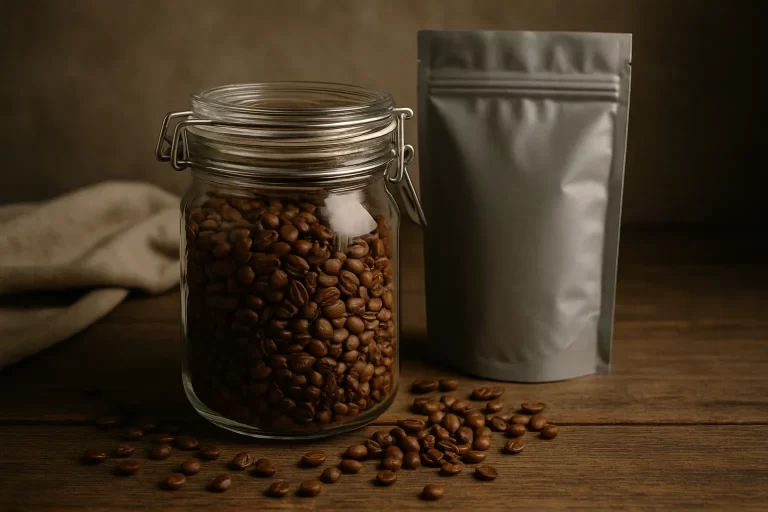
- Reusable at Home: Consumers can use small vacuum containers or jars for daily storage.
Drawbacks
- Degassing Issues: Freshly roasted beans emit CO₂ for several days. Vacuum sealing them too early can cause the bag to puff or even burst.
- Requires Timing: Beans must rest for 24–72 hours post-roast before vacuum sealing, depending on roast level and origin.
- Not Always Ideal for Long-Term Storage: Without an inert gas, vacuum might not be as protective over many months.
Modified Atmosphere Packaging (MAP): Best of Both Worlds
Some specialty roasters combine nitrogen flushing and vacuum sealing, a process known as Modified Atmosphere Packaging (MAP).
- The package is vacuumed to remove air, then flushed with nitrogen to ensure zero oxygen remains.
- This method maximizes freshness preservation, especially for single-origin or limited-edition lots.
MAP is common in capsule coffee, where consistency and long shelf life are essential.
Storage Method Comparison
| Storage Method | Oxygen Protection | Shelf Life | Aroma Retention | Cost | Ideal For |
|---|---|---|---|---|---|
| Air-tight Bags | Moderate | 2–4 weeks | Moderate | Low | Daily use |
| Nitrogen Flushing | High | 6–12 months | High | Moderate | Retail, wholesale |
| Vacuum Sealing | Very High | 3–6 months | Moderate to high | Moderate | Home, cafés |
| MAP (Vacuum + N₂) | Maximum | 12+ months | Very High | High | Premium coffee |
Home Storage Tips Based on These Technologies
You don’t need industrial equipment to apply the same principles at home. Here are a few tips:
- Use one-way valve bags: These allow CO₂ to escape without letting air in.
- Avoid frequent air exposure: Don’t open large bags multiple times a day — portion into smaller containers if needed.
- Use vacuum canisters: Some home products mimic commercial vacuum sealing effectively.
- Freeze properly: Freezing can preserve freshness for months, but only if beans are vacuum sealed and never re-frozen after thawing.
When Fresh Is Too Fresh
It’s worth noting that coffee needs resting time after roasting. Brewing coffee too soon can result in excess gas release, affecting extraction and flavor.
Recommended rest times:
- Light roast: 3–5 days
- Medium roast: 2–4 days
- Dark roast: 1–3 days
Storage methods should accommodate this rest period before sealing for long-term preservation.
Final Notes: Smart Storage = Better Coffee
For roasters, proper storage means maintaining quality from production to cup. For consumers, understanding storage atmospheres empowers better purchasing and brewing decisions.
Whether you’re a specialty café, a home enthusiast, or an importer, adopting oxygen-limiting storage methods like nitrogen flushing or vacuum sealing can dramatically improve the flavor and consistency of your coffee.
In the end, the best coffee is not only about origin and roast — it’s also about how you protect it until the moment you brew.