Brewing Methods Compared: Which One Fits Your Taste?
With so many ways to make coffee it’s easy to feel overwhelmed, especially if you’re just starting to explore the world beyond instant coffee or traditional drip machines. But the truth is, every brewing method has its own personality. Some highlight sweetness, others emphasize boldness, and some are simply about convenience.
In this guide, we’ll compare the most popular brewing methods and help you figure out which one fits your lifestyle, taste preferences, and brewing habits.
Why Brewing Method Matters
The way coffee is extracted has a huge impact on:
- Flavor: Some methods produce a cleaner cup, while others yield a richer, fuller body.
- Strength: Some methods extract more caffeine per cup.
- Time & Effort: Some are fast and easy; others are more ritualistic and detailed.
- Gear Requirements: Some need only a mug and hot water, others require specific tools.
Understanding each method will help you get the most from your beans and enjoy your ideal cup every time.
1. Drip Coffee Maker
Overview:
One of the most common household methods, drip coffee makers are automatic, making them convenient for everyday use.
Pros:
- Easy to use
- Brews multiple cups at once
- Minimal effort required
Cons:
- Less control over temperature and extraction
- Can result in a flat or over-extracted taste
Flavor Profile:
Mild, sometimes bland if not paired with good beans or filtered water.
Ideal For:
Busy households and offices that need several cups at a time.
2. French Press (Press Pot)
Overview:
A classic immersion method where ground coffee steeps in hot water and is separated with a metal plunger filter.
Pros:
- Rich and full-bodied flavor
- No paper filters, so oils are preserved
- Easy to use and clean
Cons:
- Sediment may remain in the cup
- Not ideal for people who prefer a cleaner brew
Flavor Profile:
Bold, heavy, and textured with earthy notes.
Ideal For:
People who like strong, robust coffee and a thicker mouthfeel.
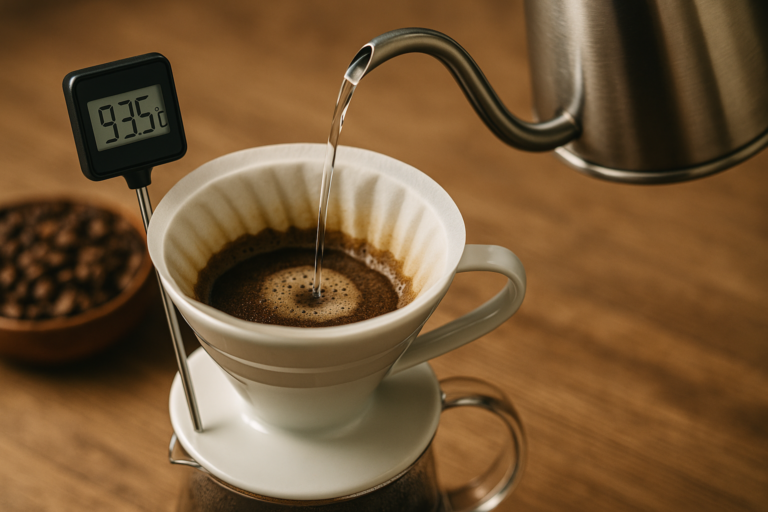
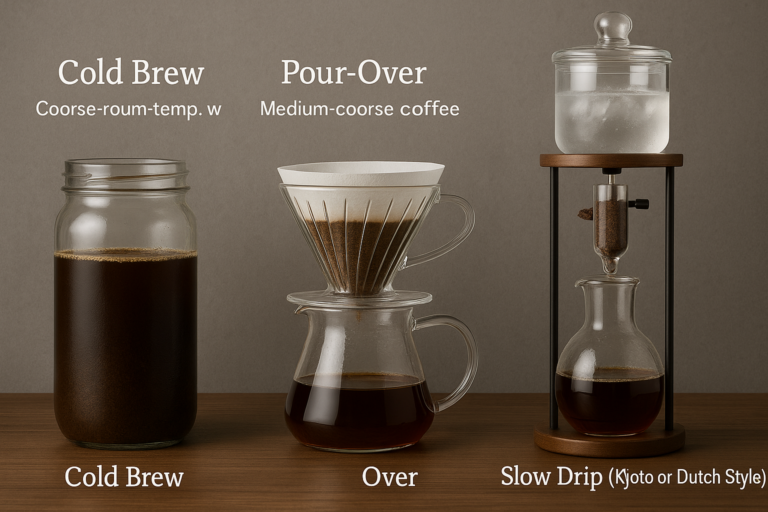
3. Pour-Over (e.g., Hario V60, Chemex)
Overview:
You pour hot water slowly over grounds in a paper filter, controlling each part of the process.
Pros:
- Total control over brewing variables
- Produces a clean, crisp cup
- Visually appealing and meditative process
Cons:
- Requires technique and patience
- Not great when you’re in a hurry
Flavor Profile:
Bright, clean, often highlights fruity or floral notes.
Ideal For:
Coffee lovers who enjoy precision and exploring flavor subtleties.
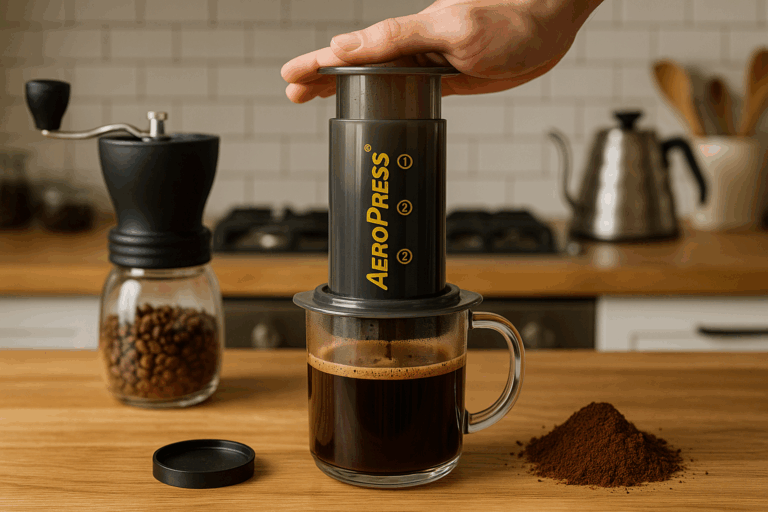
4. AeroPress
Overview:
A portable, pressurized brewing tool that uses a plunger to push hot water through coffee grounds.
Pros:
- Fast and flexible
- Easy to clean
- Portable and great for travel
Cons:
- Brews only one cup at a time
- Requires practice for best results
Flavor Profile:
Smooth and balanced; can mimic espresso or drip depending on method.
Ideal For:
People who want quality and versatility in a compact format.
5. Espresso Machine
Overview:
Forcing hot water through finely ground coffee at high pressure, producing a strong, concentrated shot.
Pros:
- Intense flavor and crema
- The base for drinks like cappuccinos and lattes
- High caffeine per ounce
Cons:
- Expensive equipment
- Steeper learning curve
Flavor Profile:
Strong, rich, slightly bitter with caramel and chocolate notes.
Ideal For:
Espresso lovers and people who enjoy milk-based coffee drinks.
6. Moka Pot (Stovetop Espresso)
Overview:
A stovetop device that brews coffee by passing boiling water pressurized by steam through grounds.
Pros:
- Affordable
- Makes strong, espresso-like coffee
- Durable and easy to store
Cons:
- Can over-extract if not watched carefully
- Not true espresso
Flavor Profile:
Bold, somewhat bitter, rich like espresso
Ideal For:
Fans of strong coffee who don’t want to invest in an espresso machine.
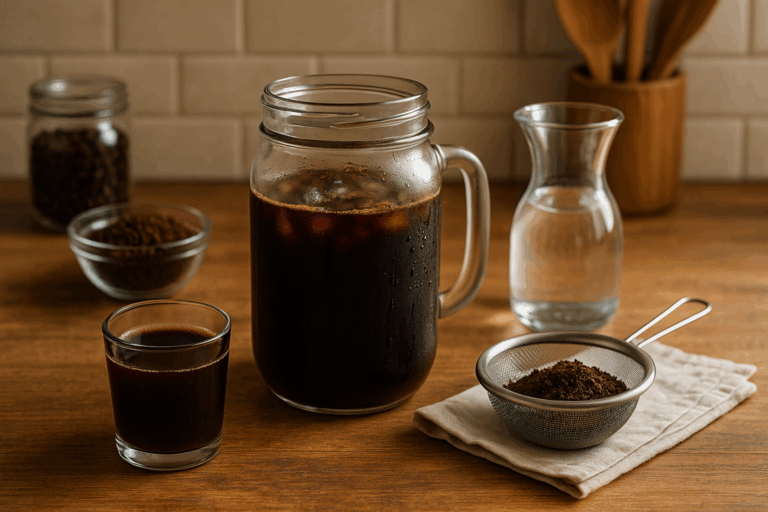
7. Cold Brew
Overview:
Ground coffee is steeped in cold water for 12–24 hours and then filtered.
Pros:
- Low acidity, smooth flavor
- Can be brewed in large batches
- Great served cold
Cons:
- Takes a long time
- Requires planning ahead
Flavor Profile:
Smooth, sweet, chocolaty, low bitterness
Ideal For:
People who prefer mild coffee or cold beverages year-round.
8. Instant Coffee
Overview:
Dehydrated brewed coffee that reconstitutes in hot water.
Pros:
- Extremely fast and convenient
- Long shelf life
Cons:
- Lower quality
- Limited flavor complexity
Flavor Profile:
Often flat or overly bitter
Ideal For:
Emergency situations, travel, and low-maintenance drinkers.
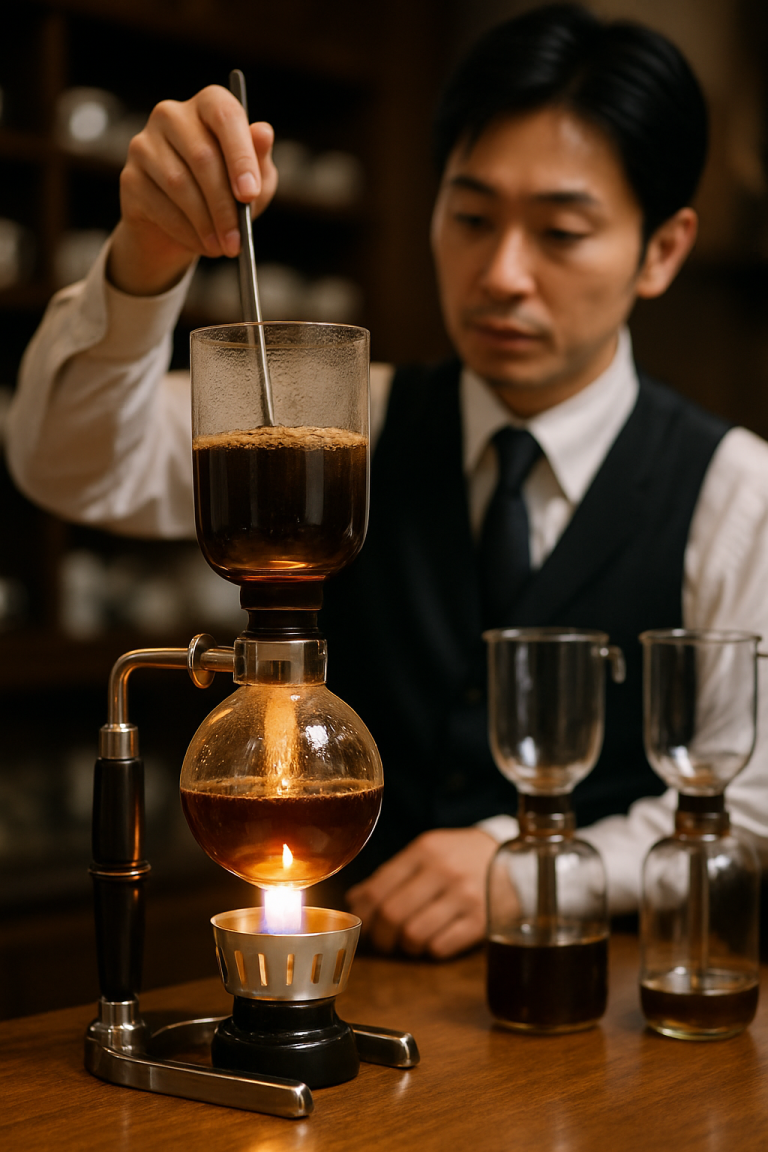
9. Siphon (Vacuum Pot)
Overview:
A theatrical, science-lab-style method that uses vapor pressure to brew coffee in a glass chamber.
Pros:
- Impressive presentation
- Produces a complex and delicate flavor
Cons:
- Expensive and fragile
- Complicated setup
Flavor Profile:
Delicate, smooth, tea-like with layered flavors
Ideal For:
Serious hobbyists and coffee geeks who enjoy the process.
10. Single-Serve Pod Machines (e.g., Keurig, Nespresso)
Overview:
Pre-packaged pods make one cup of coffee with the push of a button.
Pros:
- Super fast and easy
- Minimal cleanup
Cons:
- Expensive per cup
- Environmental concerns with pods
- Limited customization
Flavor Profile:
Depends on pod quality — often average
Ideal For:
People who prioritize speed and convenience over flavor precision.
Choosing the Right Method for You
Your ideal brewing method depends on your priorities:
| Goal | Suggested Method |
|---|---|
| Maximum flavor control | Pour-over, AeroPress |
| Rich, strong coffee | French press, Moka pot, Espresso |
| Quick and easy | Pod machine, Drip coffee maker |
| Iced and low-acid | Cold brew |
| Experimental & fun | Siphon, AeroPress |
| Travel-ready | AeroPress, Instant coffee |
If you’re new to specialty coffee, start simple — a French press or pour-over setup is affordable, educational, and produces excellent results. As your taste evolves, you can explore more tools and techniques.