Coffee and Social Movements: The Role of Japanese Cafés in 1960s–70s Protest Culture
Coffeehouses have long been associated with intellectualism, resistance, and revolution. In Japan, the humble café known as a kissaten played a surprisingly powerful role in the nation’s turbulent 1960s and 70s, a time marked by student uprisings, political protest, and artistic awakening.
This article dives into how these quiet, dimly lit cafés became safe havens for dissidents, creative minds, and a generation grappling with war, modernization, and cultural identity.
Setting the Stage: Post-War Japan
Following its defeat in World War II, Japan entered a period of rapid reconstruction. With support from the U.S., the country began modernizing its economy and political system. But by the 1960s, young people particularly students began questioning the direction of this modernization.
Key concerns included:
- The growing influence of American military and cultural power
- The renewal of the U.S.-Japan Security Treaty in 1960
- Rising inequality and labor exploitation
- Japan’s role in the Vietnam War as a logistical hub
These grievances sparked a wave of protests, walkouts, and mass demonstrations led by student organizations such as Zengakuren (All-Japan Federation of Student Self-Government Associations).
The Rise of Café-Based Resistance
Amid the chaos of public demonstrations, Japanese cafés emerged as private arenas for political discourse. These were not your typical Western-style coffee shops. Many were small, smoky, and tucked into back alleys of Tokyo, Kyoto, and Osaka. Others operated in university districts and literary neighborhoods.
In these kissaten, protest leaders planned demonstrations, read revolutionary texts, and argued over ideology. The café became a “third space” a neutral ground that wasn’t home or school, but where political consciousness was born.
Cultural Crossroads: Jazz, Coffee, and Radical Thought
During this era, many cafés adopted jazz as their soundtrack of choice. These jazu kissa (jazz cafés) became cultural hotspots. They typically featured massive vinyl collections, high-end speakers, and a rule of near silence while music played.
But beneath the melodies of Miles Davis or John Coltrane, deeper conversations were brewing:
- Translations of Karl Marx, Mao Zedong, and Jean-Paul Sartre circulated from table to table
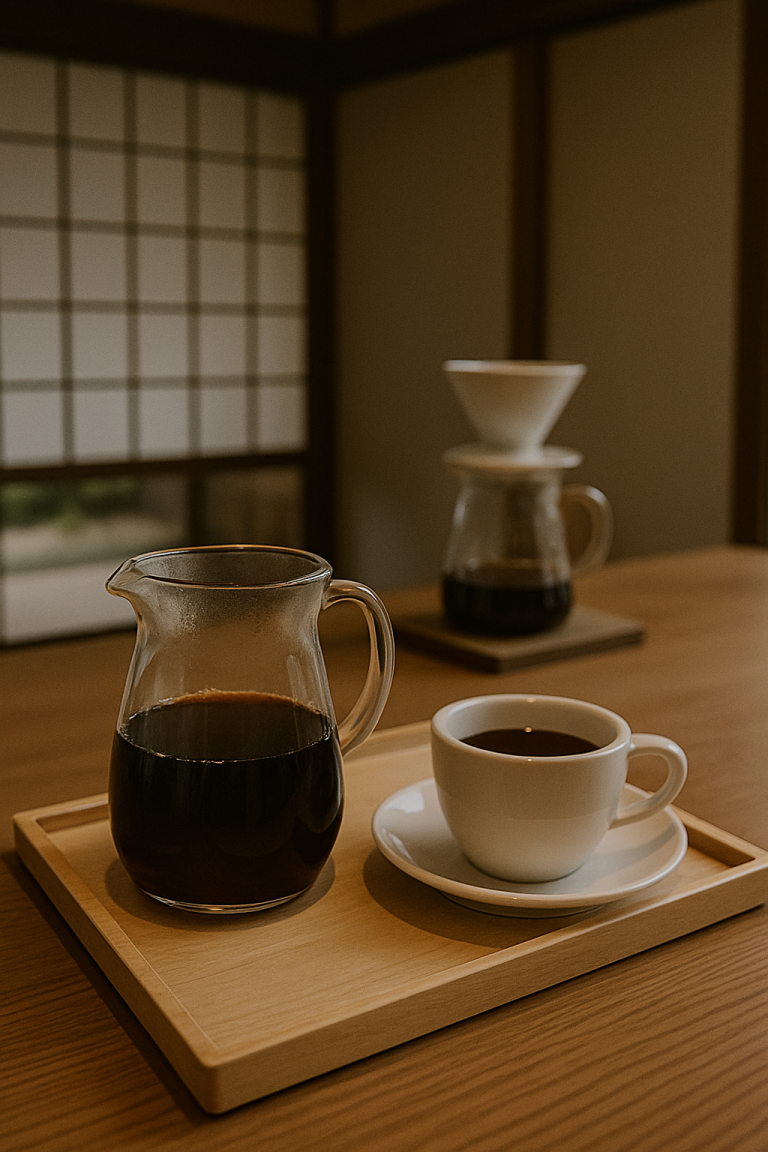
- Students debated anarchism vs. socialism over hand-dripped coffee
- Artists read poetry, played folk music, and discussed Japan’s postwar identity
These cafés weren’t just businesses they were countercultural hubs where art, philosophy, and revolution merged.
Government Surveillance and Crackdowns
By the late 1960s, the Japanese government began monitoring cafés known for their activist clientele. Undercover officers would sit silently in corners, taking notes or recording conversations. Some cafés were raided. Others were quietly shut down through pressure or zoning restrictions.
Despite this, many owners remained defiant, allowing protesters and radicals to gather. In a society that often emphasized conformity, the café stood out as one of the few spaces where dissent was tolerated—even if only barely.
Women and the Café Movement
While most protest leadership was male-dominated, cafés often gave women a voice and visibility. Female activists and students found in cafés a rare environment where they could engage in political discussion without being dismissed or marginalized.
Some women ran cafés themselves, using the space to support anti-war movements, feminist discussion circles, and anti-nuclear campaigns. This helped spark Japan’s early feminist wave in the 1970s.
Cafés as Artistic Incubators
The kissaten also played a vital role in nurturing avant-garde art, theater, and literature. Writers like Haruki Murakami who himself ran a jazz café before becoming an author have acknowledged how essential café culture was to creative life in Japan.
- Experimental theater groups met in cafés to plan performances
- Underground magazines were written, edited, and distributed from café tables
- Independent filmmakers screened work in makeshift projection spaces inside coffeehouses
The coffee, often strong and bitter, was secondary to the energy, ideas, and ferment of the time.
Decline and Legacy
By the 1980s, as student movements weakened and Japan entered its bubble economy era, the political café scene began to fade. Many kissaten closed or transformed into more commercial, less radical spaces. New generations leaned toward convenience and globalized café chains.
However, a few historic cafés still exist, quietly serving coffee to those who remember. Others have been reborn as heritage sites or alternative bookstores with cafés attached.
Why It Matters Today
In an age dominated by fast coffee and fast scrolling, remembering the role cafés played in Japan’s protest movements serves as a powerful reminder: spaces matter. Dialogue matters. And even the smallest of settings a table, a cup of coffee, a quiet corner can become the birthplace of change.
A Brew for Thought
The Japanese cafés of the 1960s and 70s weren’t about foam art or Wi-Fi they were about resistance, creativity, and courage. In those smoky rooms filled with jazz and revolution, a generation found its voice. And in every corner where ideas can still be exchanged freely over a hot drink, their spirit lives on.