The History of Coffee: From Ancient Ethiopia to Modern Coffeehouses
Coffee is more than a beverage — it’s a cultural icon, a global economy, and for many, a daily ritual. But how did a simple bean from a wild shrub in East Africa become one of the most consumed drinks in the world?
In this article, we’ll take a journey through time, exploring the origins of coffee in Ethiopia, its spread through the Arab world, Europe, and eventually the Americas, and how it evolved into the coffee culture we know today.
The Mythical Origins: Kaldi and the Dancing Goats
The most famous legend about coffee’s discovery begins in ancient Ethiopia, around the 9th century. A goat herder named Kaldi noticed his goats behaving strangely — full of energy and refusing to sleep — after eating red cherries from a certain bush.
Curious, Kaldi tried the fruit himself and experienced a similar burst of energy. He brought the berries to a nearby monastery, where monks used them to stay awake during long prayers.
While this story is more myth than fact, it reflects the deep Ethiopian roots of coffee.
The Birthplace of Coffee: Ethiopia
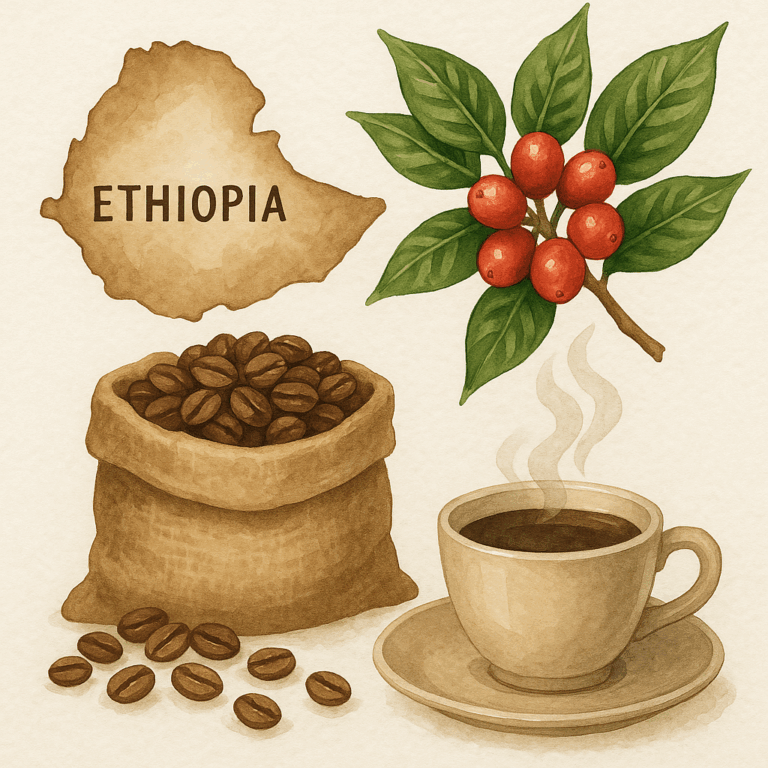
Ethiopia is widely accepted as the botanical birthplace of coffee. The Arabica coffee plant (Coffea arabica) still grows wild in Ethiopian forests today.
By the 15th century, coffee was being cultivated and brewed by Sufi monks in Yemen, just across the Red Sea. These monks discovered that drinking coffee helped them stay alert and focused during religious rituals.
From there, coffee began to spread through the Islamic world.
The Rise of Coffee in the Arab World
Coffee culture truly began to flourish in Yemen, where beans were roasted and brewed in a method similar to what we know today. By the 16th century, coffee had become a staple in cities like Mecca, Cairo, and Istanbul.
The First Coffeehouses: Qahveh Khaneh
In the Middle East, public coffeehouses called qahveh khaneh began to emerge. These were more than just places to drink coffee — they were centers of:
- Music and performance
- Philosophical discussion
- Chess and backgammon
- Political debate
Coffeehouses quickly became known as “Schools of the Wise”, much to the concern of rulers and religious leaders, some of whom even attempted to ban coffee at times.
Coffee Reaches Europe: 17th Century Buzz
Coffee arrived in Europe in the 1600s, first through Venetian trade with the Ottoman Empire. Initially met with suspicion (some even called it the “bitter invention of Satan”), it was eventually embraced — especially after Pope Clement VIII allegedly tasted it and gave it his blessing.
By the mid-17th century, coffeehouses had opened in:
- Venice (Italy)
- Oxford and London (England)
- Paris (France)
- Vienna (Austria)
These European cafés became hubs of intellectual exchange — the Enlightenment was practically fueled by caffeine.
The Global Expansion of Coffee Cultivation
With rising demand, European colonial powers began cultivating coffee in tropical colonies:
- Dutch in Java (Indonesia)
- French in the Caribbean
- Portuguese in Brazil
- Spanish in Central America
By the 18th century, coffee had become a global commodity, grown in plantations and shipped worldwide. Unfortunately, this expansion was also tied to colonial exploitation and slavery, a dark but important part of coffee’s history.
The Birth of Modern Coffee Culture
19th Century: The Industrial Age
- Invention of coffee grinders and vacuum-sealed packaging
- Rise of instant coffee (first version patented in 1881)
- Coffee becomes a household staple in Europe and North America
20th Century: Chains, Specialty, and Revolution
- 1971: Starbucks is founded in Seattle, helping to commercialize café culture
- 1980s–90s: The Third Wave Coffee Movement emerges, emphasizing:
- Single-origin beans
- Sustainable sourcing
- Barista craftsmanship
- Manual brewing methods
Coffee Today: A Global Ritual
Today, coffee is:
- Grown in over 70 countries
- Consumed by over 2 billion cups per day
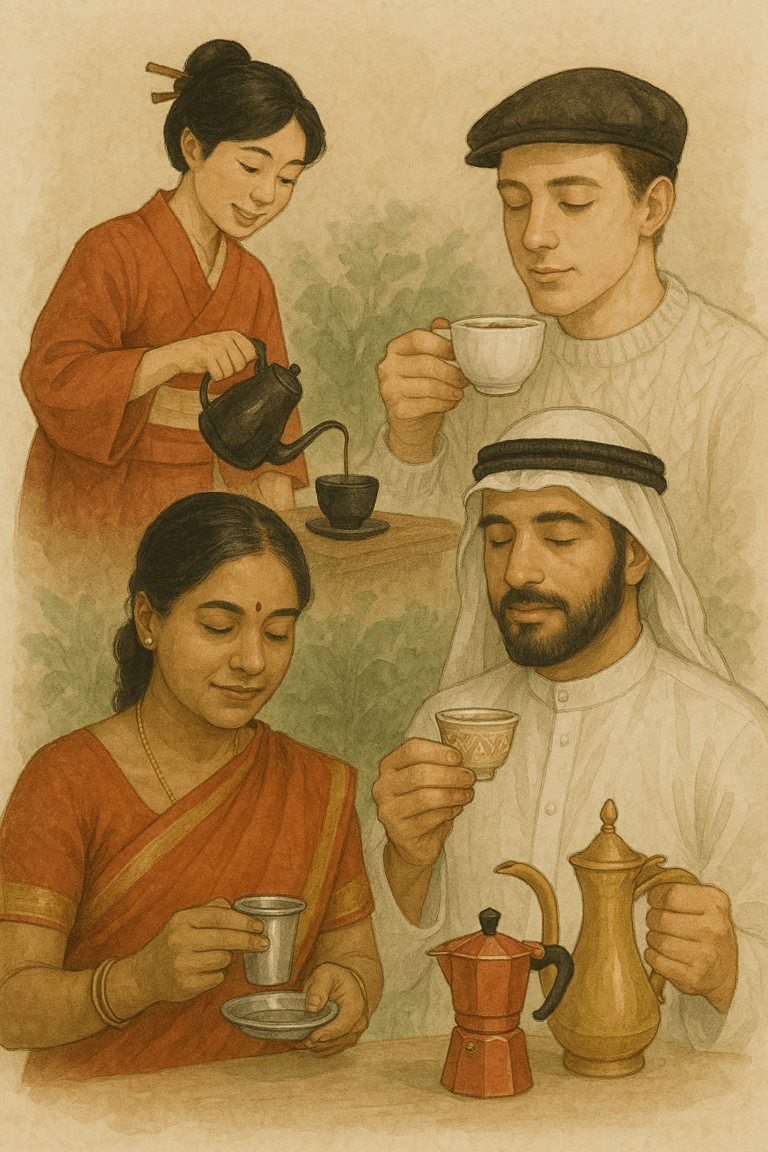
- A cultural pillar in countries as diverse as Italy, Ethiopia, Brazil, Sweden, and Japan
Coffeehouses continue to be social gathering spots, creative spaces, and remote offices for the modern age.
Final Thoughts: More Than a Drink
Coffee’s history is one of discovery, trade, conflict, innovation, and connection. From ancient rituals in Ethiopia to laptop-filled cafés in New York and Tokyo, coffee has remained a constant — evolving but always central to human interaction.
Understanding this rich journey helps us appreciate that every cup of coffee is part of a global story, centuries in the making.