Slow Brewing Methods: The Art of Coffee Made with Patience and Precision
In a fast-paced world dominated by quick fixes and instant gratification, slow brewing methods offer a refreshing counterpoint — a way to reconnect with the process and savor the ritual of making coffee. These methods aren’t just about aesthetics or tradition. They allow greater control, deeper extraction, and a cup that reflects craftsmanship and intentionality.
In this article, we’ll explore the most popular slow brewing techniques, including cold brew, slow drip, and other artisanal methods, while breaking down their unique characteristics, ideal settings, and how they elevate your coffee experience.
What Is Slow Brewing?
Slow brewing refers to manual coffee preparation methods that involve:
- Longer extraction times
- Lower pressure (or none at all)
- Precision in grind size, water temperature, and pouring techniques
Unlike automatic machines or espresso, slow brews are hands-on, allowing you to make small adjustments that significantly impact the final result.
The goal? Clarity, complexity, and control.
1. Cold Brew
Overview
Cold brew is made by steeping coarse-ground coffee in cold or room-temperature water for an extended period — usually between 12 to 24 hours.
Characteristics
- Flavor: Smooth, low-acid, chocolaty, and slightly sweet
- Body: Full-bodied, often syrupy
- Caffeine: Higher than most brews (especially if undiluted)
- Shelf Life: Can be stored in the fridge for up to 10 days
Brewing Tips
- Use a 1:5 to 1:8 coffee-to-water ratio
- Use filtered cold water
- Steep at room temperature or in the fridge
- Filter slowly through a fine mesh or paper filter
Best For
Hot days, iced coffee lovers, batch brewing, and people who want a gentler, less acidic cup.
2. Slow Drip (Kyoto or Dutch Style)
Overview
Unlike immersion cold brew, slow drip cold brewing uses gravity to drip cold water over a bed of coffee very slowly — often just one drop per second.
Characteristics
- Flavor: More refined than immersion cold brew; fruity and aromatic
- Body: Cleaner and lighter than immersion cold brew
- Time: Typically takes 6 to 12 hours
- Aesthetic: Often brewed in elegant glass towers — very photogenic
Brewing Tips
- Requires special equipment or slow drip towers
- Use medium-coarse grind
- Water should be ice-cold or slightly chilled
- Keep the drip consistent — around 1 drop per second
Best For
Coffee aficionados who want to showcase clarity and complexity, and cafés that serve signature cold drinks.
3. Pour-Over (V60, Chemex, Kalita)
Overview
Pour-over methods are iconic in specialty coffee. Hot water is poured slowly and in stages over coffee grounds in a filter cone, allowing for maximum extraction control.
Characteristics
- Flavor: Clean, nuanced, with vibrant acidity
- Body: Light to medium
- Brewing Time: 2.5 to 4 minutes
- Tools: V60 dripper, Chemex, Kalita Wave, gooseneck kettle, scale
Brewing Tips
- Use medium grind
- Pre-wet the filter and warm up the vessel
- Bloom the coffee with a small pour, then continue in slow circles
- Aim for a 1:15 to 1:17 coffee-to-water ratio
Best For
Highlighting origin characteristics and producing a cup with excellent clarity and balance.
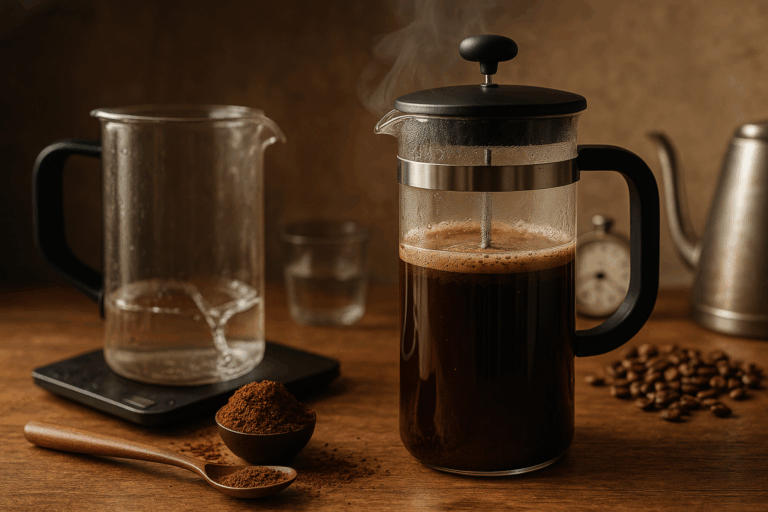
4. French Press (Immersion Brewing)
Overview
The French press is a classic immersion method. Ground coffee and hot water steep together in a carafe for several minutes before being filtered through a metal mesh plunger.
Characteristics
- Flavor: Bold and rich, with more body
- Body: Heavy, sometimes slightly oily
- Brewing Time: 4 to 5 minutes
Brewing Tips
- Use coarse grind
- Water temperature around 93–95°C (200°F)
- Stir gently after adding water
- Press slowly and steadily after brewing time
Best For
Full-bodied coffee lovers who prefer strength and warmth over sharp acidity.
5. Siphon (Vacuum Pot)
Overview
The siphon brewer uses vapor pressure and vacuum suction to brew coffee in a theatrical, science-lab style setup.
Characteristics
- Flavor: Delicate, tea-like, highly aromatic
- Body: Medium and balanced
- Brewing Time: ~6 minutes total (setup + brewing)
Brewing Tips
- Use medium grind
- Control heat carefully (butane or halogen burner)
- Stir during the brew phase for even extraction
- Ideal water temp: ~92–95°C
Best For
Coffee geeks, café showpieces, and anyone wanting a visually striking brewing ritual.
Why Slow Brewing Matters
Slow brewing isn’t just about taking your time — it’s about respecting the bean, controlling each variable, and building a deeper relationship with the drink you love.
Here’s what makes slow brewing special:
- Mindfulness: It turns coffee into a ritual rather than a routine.
- Customization: You can adapt everything — grind size, temperature, flow rate — to suit your taste.
- Flavor Clarity: Slow brews bring out subtle notes lost in fast or automated brewing.
- Craft: You’re in control, and the quality of the final cup reflects your technique.
Final Thoughts: The Reward of Patience
In a world where speed is everything, slow brewing is a quiet revolution. It reminds us that good things take time — and that when it comes to coffee, patience is more than a virtue; it’s a flavor enhancer.
Whether you’re enjoying a floral Ethiopian V60, a bold French press, or a refined Kyoto drip, slow methods give you the chance to experience coffee at its purest.
So take a deep breath, grind fresh, pour slow, and enjoy the process. The cup you’ll create is more than just coffee — it’s craft in liquid form.